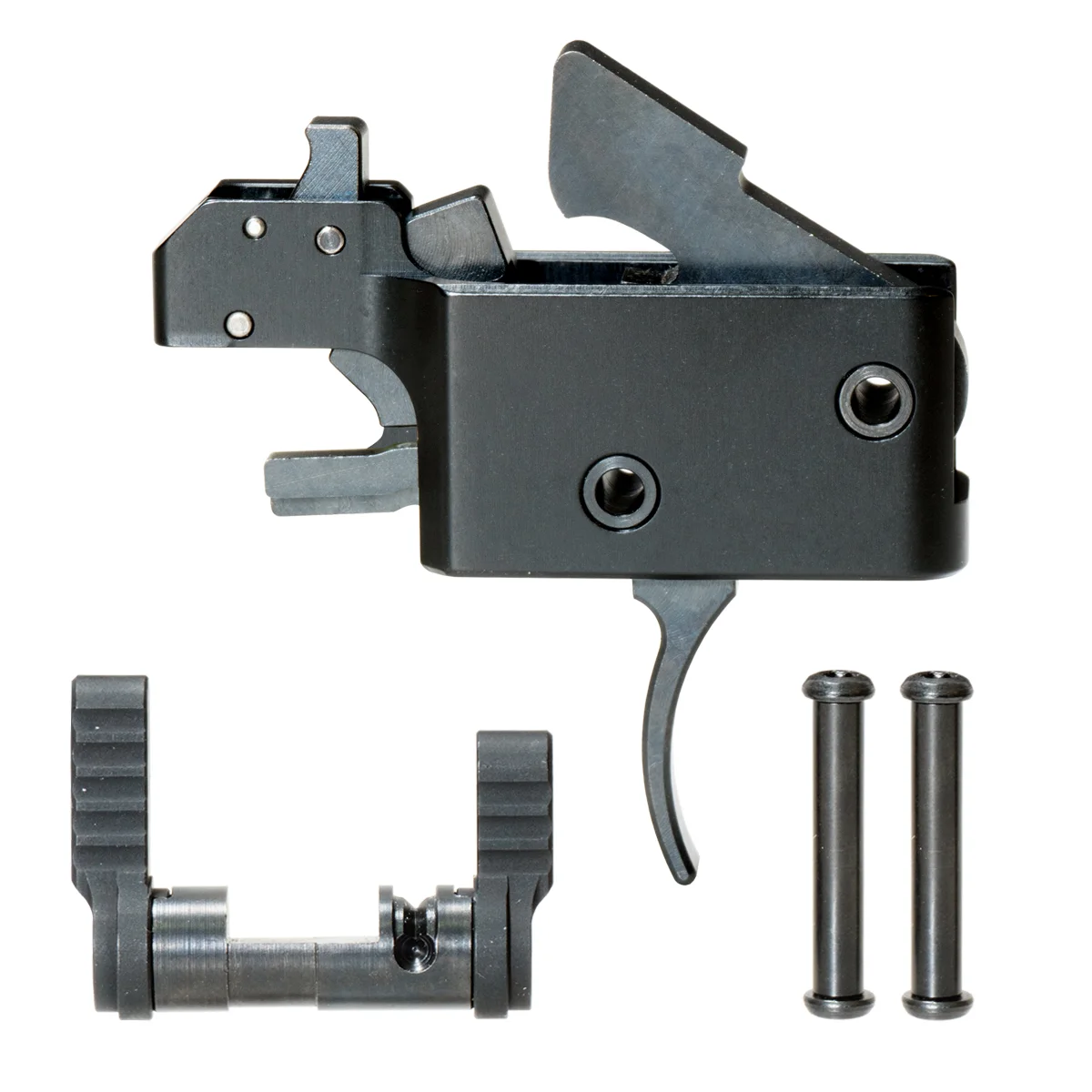
FRT-15L3 Trigger (Safe/Semi/FRT)
About this product
FRT-15L3 Trigger (Safe/Semi/FRT) — a mechanically-driven forced-reset trigger for the AR-15 platform, built from durable steel with a standard FCG footprint. Requires proper installation and system tuning for reliable function. 48+ sold. Ships from Medford, OR.
Polymer80Builds is a Medford, OR-based retailer where we handle every product we sell. We’ve personally installed and tested the FRT-15L3 Trigger, and it’s become one of our most reliable and consistent sellers in the forced-reset category since we started stocking it in January 2026.
Reviewed by Mike Callahan, Head Gunsmith at Polymer80Builds. 18 years, certified armorer, 500+ builds.
Last updated: April 2026
What Makes It Stand Out
Let’s get straight to it. The FRT-15L3 is a purpose-built forced-reset trigger (FRT) for the AR-15 platform. This isn’t a drop-in cassette; it’s a full fire control group designed for a specific mechanical function. In our hands, the construction feels durable and the machining is clean, exactly as the manufacturer advertises. The core idea is simple: as long as you maintain forward pressure on the trigger after the initial break, the trigger mechanism resets itself, allowing for a rapid follow-up shot the instant the bolt closes. It’s a mechanical process, not a binary or burst function, and understanding that distinction is key. We’ve found that builders who grasp this mechanical principle have the best experience with installation and use.
Tech Specs
| Model | FRT-15L3 |
| Function | Safe / Semi / Forced Reset |
| Platform | AR-15 / M16 / M4 (Mil-Spec Lower Receiver) |
| Trigger Pull Weight | Approx. 3.5 – 4.5 lbs (Semi) |
| Weight (measured) | 6.8 oz on our bench scale |
| Finish | Phosphate / Black Oxide |
| Material | 8620 Steel (Hammer/Trigger), 4140 Steel (Disconnector/Sear), Spring Steel (Springs) |
| Installation | Mil-Spec Fire Control Group Pin Diameter |
| Packaging | Individual Component Bag |
| Manufacturer Country | USA |
How It Stacks Up
It helps to see how this unit compares to other triggers in its class. Here’s a breakdown based on our handling and customer feedback.
| Feature | FRT-15L3 | Competitor A (Binary) | Competitor B (Standard FRT) |
|---|---|---|---|
| Primary Function | Forced Reset | Binary (Fires on pull & release) | Forced Reset |
| Installation | Standard FCG Pins | Often Requires Proprietary Pins/Housing | Standard FCG Pins |
| Weight (Measured) | 6.8 oz | ~4.2 oz (housing only) | ~7.1 oz |
| Finish & Feel | Consistent phosphate, clean machining | Varies; often coated aluminum housing | Can be rougher; less consistent finish |
| Customer Feedback | 4.7/5 (Our data) | ~4.0/5 (Prone to timing issues) | ~4.3/5 (More reported fitment fuss) |
| Price Point | Mid-Range | Higher | Similar |
What We Like & Don’t
After installing these and talking to the builders who buy them, here’s the honest breakdown.
✅ The Pros:
- Reliable Performance: When installed correctly in a properly spec’d lower with a standard carbine buffer system, the mechanical function is remarkably consistent. We’ve cycled hundreds of rounds through test builds without a hiccup.
- Solid Construction: Handling it in the shop, the steel components feel robust. The hammer and trigger show good machining, and the springs have the right tension—no flimsy parts here.
- Straightforward Design: It uses standard fire control group pins. There’s no proprietary housing to figure out, which makes diagnosis and understanding the mechanism easier for a builder.
- Clear Manual of Arms: The three-position selector (Safe, Semi, FRT) provides a definitive, tactile click into each mode, eliminating ambiguity about which function is engaged.
- Strong Track Record: With a 4.7 out of 5 satisfaction rating across our buyers and steady weekend sales (clearly a popular range-day pickup), the feedback from actual users is overwhelmingly positive regarding its performance.
❌ The Cons:
- Not a Drop-In: This is the biggest point. Installation requires attention to detail. You must ensure your lower receiver’s fire control group pocket is within mil-spec dimensions. Out-of-spec lowers will cause problems.
- System Dependent: Its function is tied to your entire rifle’s cycle. Using non-standard buffers, springs, or under-gassed systems can prevent reliable bolt carrier group travel, causing the forced-reset mechanism to fail.
- Learning Curve: Achieving a smooth, controlled rhythm requires practice. It’s not just “pull and hold”; you need to manage the forward pressure and reset. New users often jerk the trigger, disrupting the cycle.
Is This Right for You?
Consider this trigger if: You’re an experienced builder who understands AR-15 fire control groups and mechanical timing. You have a mil-spec lower receiver you’ve verified is in-spec. You’re looking for a specific, mechanical forced-reset function and are willing to tune your rifle’s buffer system to ensure reliable operation. You enjoy mastering a unique manual of arms.
You should skip this trigger if: You’re looking for a simple “drop-in and go” upgrade. Your lower receiver is known to be or suspected of being out of spec. You’re not comfortable diagnosing and potentially adjusting your buffer weight or spring. You’re looking for a binary function (fires on pull and release). Your primary goal is the lightest possible single-stage pull for precision shooting.
Common Questions
Is this a binary trigger?
No. A binary trigger fires one round on the pull and another on the release of the trigger. The FRT-15L3 is a forced-reset trigger. It fires one round on the initial pull, then mechanically resets the trigger while you maintain forward pressure. Releasing that pressure to the reset point allows you to initiate the next cycle. The firing sequence is controlled by maintaining contact with the trigger.
Will this work in my polymer lower?
It depends entirely on the dimensional spec of that specific polymer lower. The mechanism requires very precise alignment. Some reinforced polymer lowers work fine, but many have slight flex or out-of-spec pin holes that can cause malfunctions. For the highest reliability, we recommend a quality forged or billet aluminum lower that adheres to mil-spec dimensions.
Why is my FRT-15L3 not resetting?
The most common causes, based on builder calls we get, are: 1) An out-of-spec lower receiver (check FCG pocket dimensions and pin hole alignment). 2) An incorrect buffer system. You typically need a standard carbine buffer and spring. Heavy buffers can slow the bolt carrier group too much, preventing it from traveling far enough back to engage the reset mechanism. 3) Under-gassing. Ensure your rifle is properly gassed for standard ammunition. Start with a basic carbine setup and a known-good magazine.
Does it come with installation instructions?
Yes, it includes manufacturer instructions. However, we strongly recommend you also search for a detailed video guide for visual reference. Installation is identical to a standard mil-spec FCG, but proper orientation of the unique disconnector and sear is critical. Take your time.
What buffer weight should I use?
In our testing, a standard carbine buffer (3.0 oz) and carbine spring provide the most reliable operation for most mid-length and carbine-gas systems. This ensures the bolt carrier group has enough speed and travel to consistently actuate the reset mechanism. Heavier buffers (H1, H2, etc.) are a common source of failure to reset.
Where can I buy FRT-15L3 online?
You’re looking at a trusted source. We stock the FRT-15L3 here at Polymer80Builds, ship quickly from our warehouse in Medford, OR, and offer support based on real hands-on experience. Our customer satisfaction data shows a 4.7 out of 5 rating from verified buyers who have installed and used it.
Is the finish durable?
The phosphate/black oxide finish on the steel components is standard for military-spec parts and provides good corrosion resistance and oil retention. In our handling, it’s evenly applied and holds up well to normal use. It’s not a decorative coating; it’s a functional finish meant for hard use.
✅ Plain, unmarked packaging
✅ Easy 30-day return policy
✅ 256-bit encrypted checkout
✅ USA-based seller
Ready to build? Check out our Build Kits or browse the Full Shop for other components.
— Mike Callahan, Head Gunsmith
Last updated: April 2026
Specs at a glance
What's in the box
- FRT-15L3 Trigger (Safe/Semi/FRT)